
Las Vegas to Bryce Canyon: A No-Nonsense Road Trip Guide
The definitive guide for the drive from Las Vegas to Bryce Canyon. Get realistic drive times, essential stops, and insider tips to make the trip worth it.
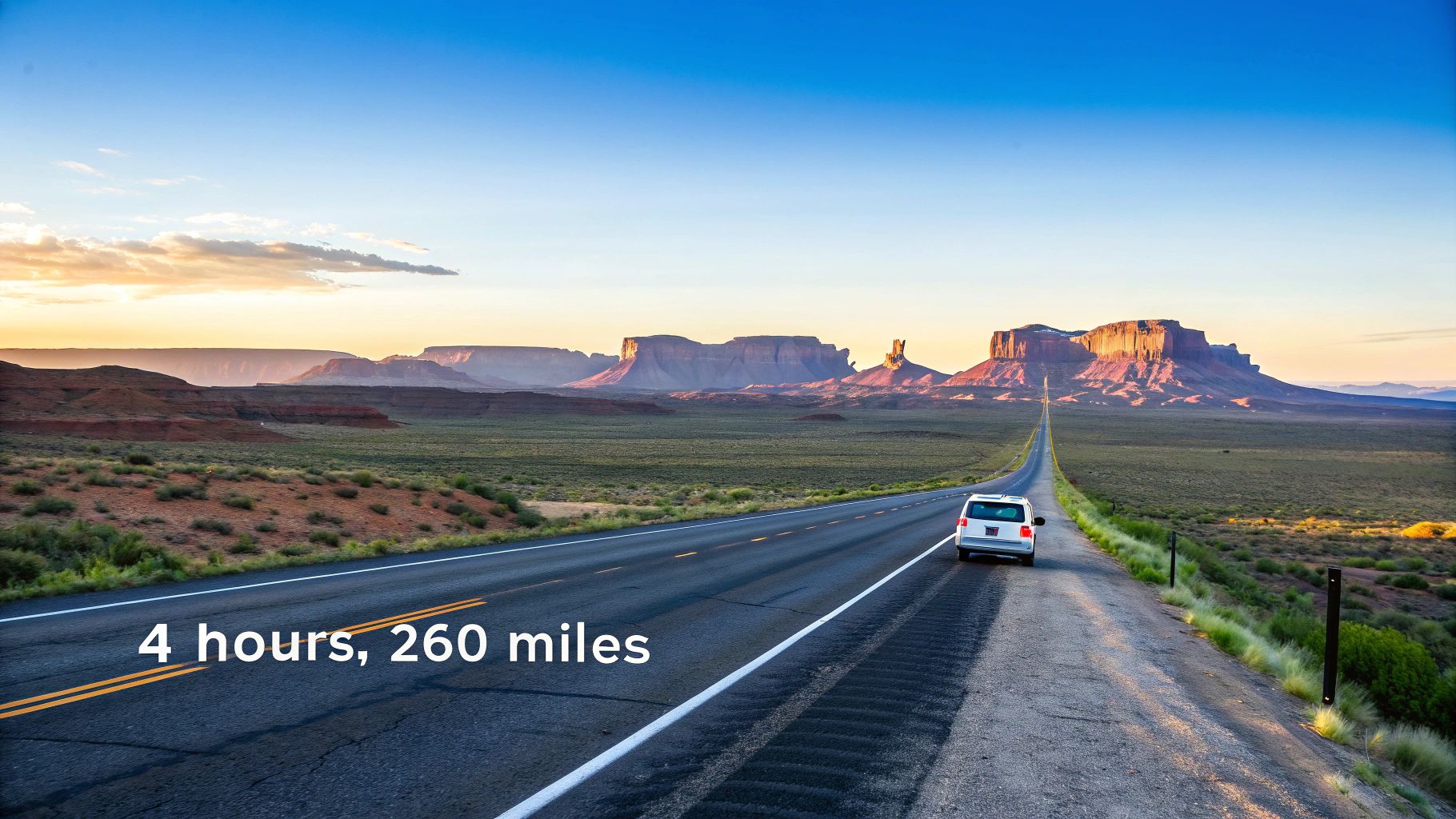
Let's get straight to it. The drive from Las Vegas to Bryce Canyon National Park is about 260 miles and takes at least 4 hours of pure driving. To do this right, leave Vegas by 7 AM on a weekday. This simple move gets you ahead of city traffic and puts you at the park entrance before the tour buses clog everything up.
What's the Drive Really Like?
This isn't just a commute; it's a transition from the neon glow of the Mojave Desert to the high-altitude pine forests of Southern Utah. The route is mostly straightforward, following I-15 before peeling off onto smaller, scenic state roads.
You won't be alone. Vegas is a launchpad for national park trips. With over 41 million visitors expected in the city this year, thousands are hitting the same road. An early start is non-negotiable if you want to avoid a convoy. You can read more about Las Vegas tourism trends to understand the numbers.
The biggest mistake people make? Forgetting the time zone change. It gets people every single time.
Las Vegas to Bryce Canyon Drive: The Numbers
This table gives you the real-world stats so you can plan properly.
| Metric | Realistic Expectation |
|---|---|
| Total Drive Time | 4 hours (minimum, without stops) |
| Distance | 260 miles (418 km) |
| Best Departure Time | 6:00 AM - 7:00 AM from your Vegas hotel |
| Time Zone Change | Yes, you lose one hour heading to Bryce |
Remembering these details, especially the time change, is the first step to a trip that doesn't immediately go off the rails.
Which Route Should You Take?
When you're mapping the drive from Las Vegas to Bryce Canyon, you have two choices. This isn't just about following a GPS; it's a trade-off between speed and scenery.
Let's cut to the chase: for over 90% of travelers, the fastest, most direct route is the right call. It gets you to the park with enough daylight and energy left to actually explore.
The Direct Route (For Pretty Much Everyone)
This is your efficient, no-fuss option. You’ll take Interstate 15 North out of Vegas, drive a couple of hours to Cedar City, Utah, and then follow the signs. It’s a clean, straightforward drive on a well-maintained highway.
- Step 1: From Las Vegas, get on I-15 North.
- Step 2: Drive about 170 miles to Cedar City.
- Step 3: Take exit 57 for UT-130 and follow signs for UT-14 East.
- Step 4: You'll connect to US-89 North, then turn right onto UT-12 East. This scenic byway leads directly to the Bryce Canyon entrance.
Honestly, if you're on a one or two-day trip, this is the only logical route. It maximizes your park time—which is the entire point, right?
The Scenic Detour (Only if You Have a Full Day to Burn)
For those with more time, a longer route winds through Valley of Fire State Park, Nevada's oldest. This detour adds about 90 minutes of pure driving, not including the two to three hours you'll want for exploring its wild, red rock landscapes.
Last time I took this "scenic" route, I got stuck behind a slow-moving convoy of RVs for nearly an hour. The views were impressive, but the delay was a stark reminder that detours always come with trade-offs. It's a great option, but only if you're not on a tight schedule.
This route only makes sense for multi-day trips where you can dedicate an entire day just to the journey. Trying to cram it into a short trip is a rookie mistake that leaves you exhausted before you see your first hoodoo. Sorting out these logistics is where something like the WanderAssist 60-second planner can cut through the decision fatigue and build a custom travel itinerary that actually works.
Where Are the Essential Stops?
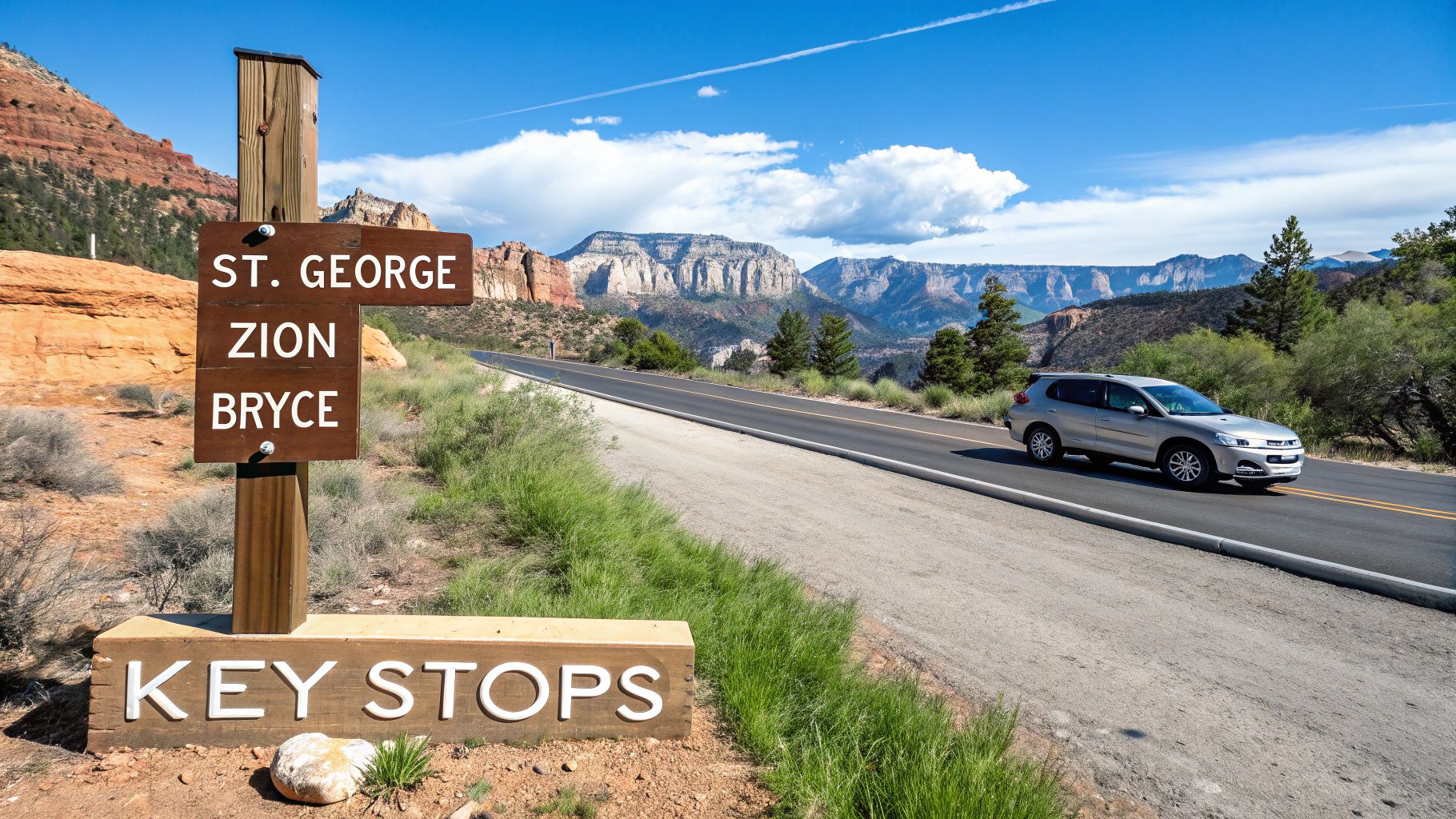
Let's be real—this road trip isn't a museum tour. The quickest way to ruin the drive is by trying to cram in too many stops, turning it into a frantic chore. The goal is to pick detours that genuinely add to your experience, not just add miles to the odometer. Forget those exhaustive lists of roadside oddities. We're focusing on a few practical, high-impact stops.
Your Non-Negotiable Stop: St. George, Utah
About two hours into your drive, you’ll hit St. George. This isn't a suggestion; it's a mandatory pit stop. This is the last town of any real size before you head into the much more remote country around Bryce Canyon.
Is It Worth Detouring for Zion?
It's incredibly tempting to squeeze a full visit to Zion National Park into this drive. My advice? Don't. Between the mandatory shuttle and the enormous crowds, Zion deserves its own dedicated day.
A much smarter move is the quick detour to the Zion-Mount Carmel Tunnel East Overlook. This stop gives you a powerful, sweeping view into the main canyon without the logistical headaches of entering the park. It's a high-reward detour that delivers a taste of Zion's scale in under an hour.
What About Cedar Breaks?
If you have more time and want to see hoodoos without the Bryce-level crowds, consider routing through Cedar Breaks National Monument. It’s often called a "mini-Bryce" and sits at an elevation of over 10,000 feet. The natural amphitheater is impressive, and you'll likely share the view with just a handful of people. Just be aware that the main road, UT-148, is almost always closed for snow from late October until late May. Always check road conditions before committing.
Worthwhile Stops vs. Tourist Traps
It's easy to get sidetracked. On a drive like this, time is your most valuable asset. Here’s a quick breakdown of what’s actually worth it.
| Stop | Why It's Worth It | Time Commitment | Our Take |
|---|---|---|---|
| St. George, UT | Last chance for cheap gas, big grocery stores, and decent food. | 30–60 minutes | Don't skip this. Topping off your tank and cooler here will save you money and headaches. |
| Zion Overlook | A massive visual payoff for very little effort. See the canyon without the crowds. | 45–60 minutes | The perfect "bang-for-your-buck" stop. You get the view without the logistical nightmare. |
| Valley of Fire | Incredible red rock formations. A fantastic detour, but only if you have a full extra day. | 3–5 hours minimum | A significant time sink. Don't try to cram this in on a tight schedule. |
| Mesquite, NV | A casino town on the border. Not much else to see. | 15–30 minutes | It's just another place for gas. St. George is a much better stop just up the road. |
| Cedar City, UT | A college town with a Shakespeare festival, but it's off the main path to Bryce. | 1–2 hours | Skip it unless you're staying overnight. It doesn't add much to the drive itself. |
This road trip is about making smart choices, not seeing everything. And while it's tempting to blast out of the city, remember there are plenty of unique things to do in Las Vegas, Nevada before you hit the road. Pick one or two key stops. You'll arrive at Bryce Canyon feeling refreshed, not completely wiped out.
The WanderAssist Reality Check
<iframe width="100%" style="aspect-ratio: 16 / 9;" src="https://www.youtube.com/embed/ZMtirywlZjU" frameborder="0" allow="autoplay; encrypted-media" allowfullscreen></iframe>Alright, here’s what most travel blogs gloss over. That drive from Las Vegas to Bryce Canyon looks straightforward on the map, but it’s full of little traps.
The biggest is the time zone jump. As soon as you cross into Utah, you’re in the Mountain Time Zone. You lose one hour. You think you'll roll into the park at 3 PM with tons of daylight, but nope, your clock suddenly says 4 PM, and that golden hour for photos just got a lot shorter. I can't tell you how many perfect sunset plans have been torpedoed by this simple fact.
Price Warning: The High Cost of Convenience
Let's talk money. The little gateway towns right outside the park, like Bryce Canyon City, know they have a captive audience. Trust me, the gas stations and general stores price things accordingly. Gas prices and snacks can easily be 25-40% higher than in a larger town like St. George. Fill up your tank and stock up before you make that final push to the park. It’s not just about saving money; it's about avoiding that sinking feeling of being gouged for basic supplies.
Dress for Altitude, Not the Vegas Strip
Finally, let's get real about the weather. It's easy to leave the heat of Vegas in shorts and a t-shirt. That is a painful mistake. Bryce Canyon sits at an elevation of over 8,000 feet, and it's dramatically colder than the desert floor.
On one of my trips in late spring, I watched a family shivering at Sunset Point, looking miserable. They were dressed for the Vegas Strip—shorts, sandals, thin shirts—while a brisk wind dropped the temperature into the 40s. Their whole experience was soured because they weren't prepared. Las Vegas is at 2,000 feet; Bryce is a vertical mile higher. Always pack layers. A fleece and a windbreaker are non-negotiable, no matter how hot it is when you start in Vegas.
How Many Days Do You Really Need?
Let's get real about timing. How long you give yourself for this trip completely changes it from a mad dash into an actual vacation.
I'm just going to say it: a one-day trip is a terrible idea. You're looking at a punishing eight-hour driving marathon. You'll spend more time looking at your windshield than the park. It’s the "I-guess-I-can-say-I've-been-there" version—a frantic run to a viewpoint, a quick photo, and then the long drive back. You might see Bryce Canyon, but you won't experience it.
Why Two Days is the Sweet Spot
For a trip that's actually worth the drive, two days is the absolute minimum. This gives you an overnight stay, which is crucial. Bryce isn't a static painting; its personality changes with the light. The hoodoos only truly come alive at sunrise and sunset.
- Day 1: Leave Las Vegas by 7 AM. Stop for lunch in St. George. Arrive at Bryce Canyon around 3 PM (remember you lose an hour!). This leaves you plenty of time to check in and head to Inspiration Point for the late-afternoon light.
- Day 2: Get up before the sun for Sunrise Point. After, you'll have a few hours for a hike like the Queen's Garden Trail before hitting the road back to Vegas.
This pacing keeps you from burning out and lets the place sink in.
Why Three Days is Even Better
Adding a third day is a game-changer. It transforms the trip from a focused visit into a proper regional exploration. This is the plan if you want to add another major park, like Zion, without feeling rushed. It gives you what every great road trip needs: breathing room.
This slower approach is becoming more popular. A recent dip in summer tourism gives you a strategic advantage; Bryce Canyon saw an 8% drop in visitors during peak summer months last year, a trend seen across many of Utah's parks. This suggests aiming for the shoulder seasons—April-May or September-October—is the smartest move. You can find more insights on Utah's tourism trends on kuer.org and plan for a quieter experience.
Choosing the right itinerary is half the battle, but showing up with the right gear is just as critical. The high elevation means packing layers is non-negotiable. If you need help, our essential list for packing for a trip will make sure you don't get caught out in the cold.
At the end of the day, the best plan respects your own time and energy. Don't try to cram a three-day adventure into a single, exhausting day.
Answering Your Top Questions About the Drive
Every road trip comes with questions. Let's tackle the most common ones for the drive from Las Vegas to Bryce Canyon.
Is the Road from Las Vegas to Bryce Canyon Difficult to Drive?
No, for the most part, it's surprisingly easy. You’ll spend most of your time on Interstate 15, a big, well-maintained highway. The last hour or so transitions to smaller, two-lane state highways like UT-12. These roads are paved and in great shape but get curvy as you gain elevation. The real challenges aren't the roads but the conditions.
- Winter Travel: Between November and April, checking road conditions is a must. The higher elevations get snow and ice, which can lead to closures.
- Wildlife: Be extra vigilant around dawn and dusk for deer on the roadside.
Can I See Both Bryce Canyon and Zion in One Day from Las Vegas?
Let me be direct: no. Trying to cram both parks into a single day trip from Vegas is a recipe for a miserable time. It's technically possible to drive past both, but you won't experience either. You'd be looking at over 10 hours of driving alone, leaving no time to get out of the car. It turns an amazing trip into an exhausting checklist.
My honest advice? Pick one park. If seeing both is non-negotiable, you absolutely must plan for at least two days with an overnight stay.
What Is the Best Time of Year for This Road Trip?
The sweet spots are the shoulder seasons: spring (April-May) and fall (September-October). The weather is just right—not scorching in the desert, not yet freezing at Bryce Canyon's 8,000-foot elevation. You'll also miss the peak summer crowds. Winter has its own quiet appeal with snow on the hoodoos, but you have to be ready for cold temperatures and potential road closures.
Do I Need to Pay an Entrance Fee for Bryce Canyon?
Yes. Bryce Canyon National Park has a per-vehicle entrance fee that's good for seven days. You can pay with a credit card at the gate. Pro tip: if you plan to visit any other national parks—like Zion or the Grand Canyon—within the next year, buy the America the Beautiful Pass. This annual pass gets you into all U.S. National Parks and almost always pays for itself if you visit just two or three.
This timeline helps visualize how trip length changes the experience.
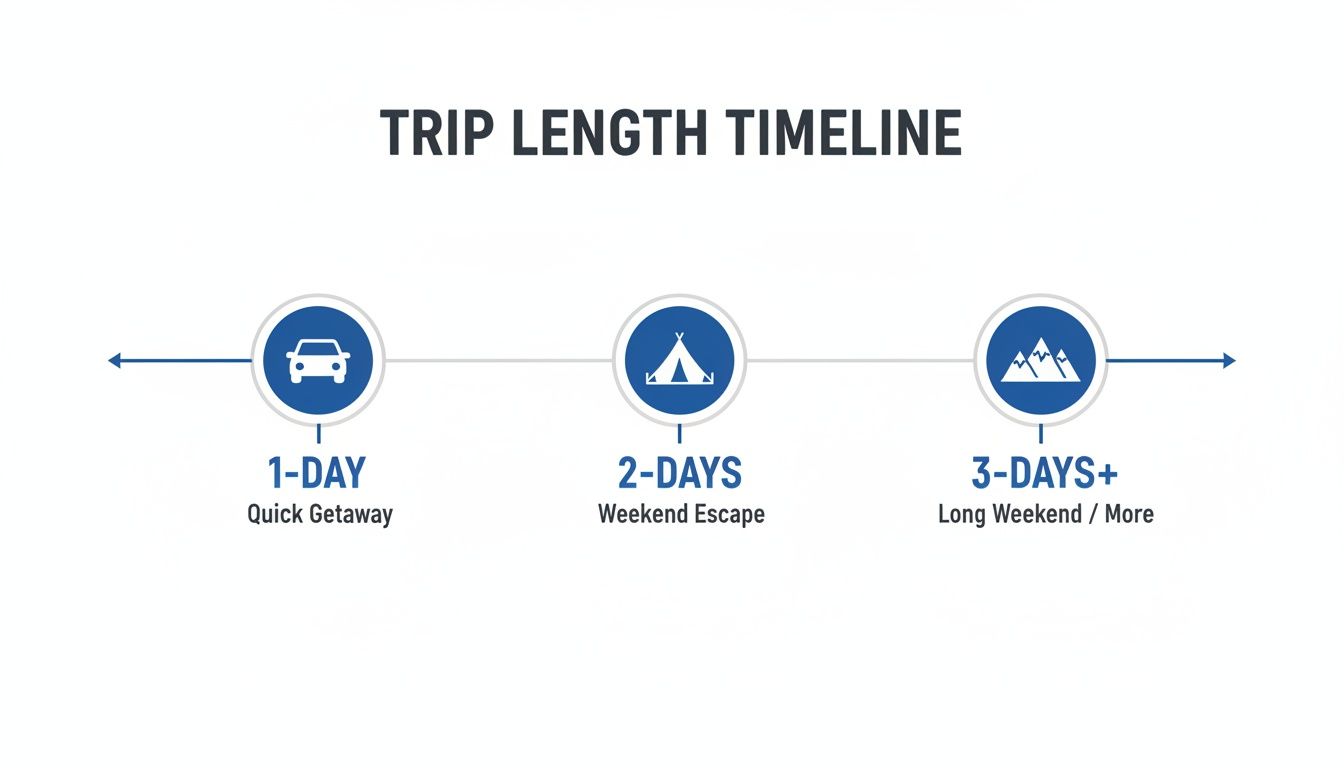
As you can see, a one-day trip is just a whirlwind of driving. Stretching it to two or three days transforms it into a relaxed and much more memorable exploration.